

Stainless Steel Coil
Why Choose Us
Professional Team
Wuxi Hongcheng Metal Products Steel Co.,ltd is a manufacturer and exporter dedicated to stainless steel industry for decades. With improving sales and service experience, we have now built strong business relationships with clients at home and abroad.
Wide Range of Products
Our main products are featuring stainless steel sheet, coil, bar, pipe, flat steel, square steel, angel steel, channel steel, hexagonal rod, etc. Our processing includes mirror surface, common wire drawing, oil mill, titanium coating, etching checked plate and other customized processing.
Advanced Equipment
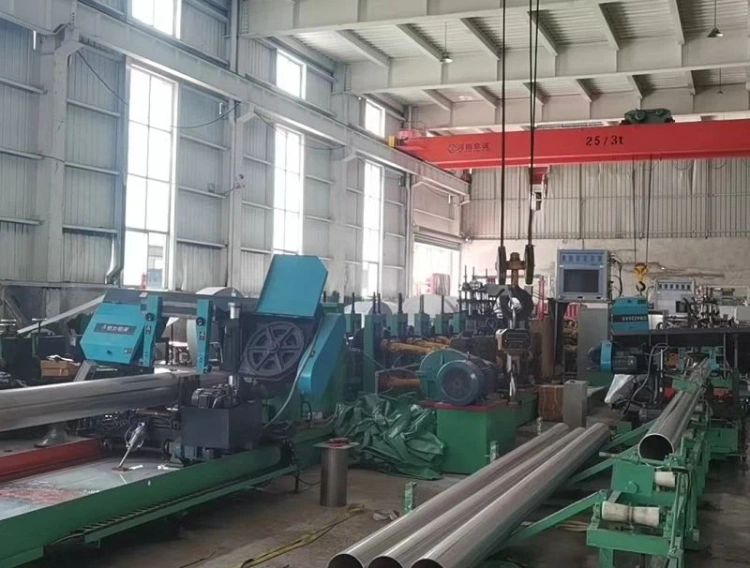
We have our own roll slitting equipment and shock wave device. If our customer need a coil weighs 4 tons, we can split it on our own. Other processing requirements can also be satisfied.
Quality Control
We control the product quality critically for every step during the manufacturing. We offer technical data sheet on our products that can guarantee the quality.
What Is Stainless Steel Coil
The stainless steel coil is a type of metal coil made from stainless steel, which is a corrosion-resistant alloy of iron, carbon, and other elements like chromium, nickel, and molybdenum. The coil is typically manufactured through a process of hot-rolling, cold-rolling, or other forming techniques, which allow the stainless steel to be shaped into a thin, continuous strip.
-
![Stainless Steel Coil 316L Best Price]() Stainless Steel Coil 316L Best Price316L stainless steel coil, a low-carbon variant of 316 grade, boasts excellent corrosion resistance, especially to chloride-induced pitting. It suits marine, chemical, food-processing industries,...read more
Stainless Steel Coil 316L Best Price316L stainless steel coil, a low-carbon variant of 316 grade, boasts excellent corrosion resistance, especially to chloride-induced pitting. It suits marine, chemical, food-processing industries,...read more -
![Stainless Steel Coil 321H Made in China]() Stainless Steel Coil 321H Made in ChinaOur warehouse houses premium SS321H steel coils, a titanium-stabilized austenitic stainless steel. Delivering outstanding high-temperature resistance, intergranular corrosion protection and...read more
Stainless Steel Coil 321H Made in ChinaOur warehouse houses premium SS321H steel coils, a titanium-stabilized austenitic stainless steel. Delivering outstanding high-temperature resistance, intergranular corrosion protection and...read more -
![Stainless Steel Coil 316 Made in China]() Stainless Steel Coil 316 Made in China316 stainless steel coils excel in warehouses with excellent corrosion resistance, ideal for harsh environments. Features 2-3% molybdenum, enhancing chloride resistance. Thickness 0.3–3.0mm, width...read more
Stainless Steel Coil 316 Made in China316 stainless steel coils excel in warehouses with excellent corrosion resistance, ideal for harsh environments. Features 2-3% molybdenum, enhancing chloride resistance. Thickness 0.3–3.0mm, width...read more -
![Stainless Steel Coil304 Made in China]() Stainless Steel Coil304 Made in China304 stainless steel coils, made from premium 18Cr-8Ni alloy, offer excellent corrosion resistance and durability. Stored individually in a dry warehouse, they feature smooth surfaces and stable...read more
Stainless Steel Coil304 Made in China304 stainless steel coils, made from premium 18Cr-8Ni alloy, offer excellent corrosion resistance and durability. Stored individually in a dry warehouse, they feature smooth surfaces and stable...read more -
![421 Stainless Steel Coil Best Price]() 421 Stainless Steel Coil Best Price421 Stainless Steel Coil Brief Introduction 421 stainless steel coil is a martensitic grade with excellent corrosion resistance and moderate strength. It features good machinability and heat...read more
421 Stainless Steel Coil Best Price421 Stainless Steel Coil Brief Introduction 421 stainless steel coil is a martensitic grade with excellent corrosion resistance and moderate strength. It features good machinability and heat...read more -
![309 Stainless Steel Coil Best Price]() 309 Stainless Steel Coil Best Price309 stainless steel coils are premium Cr-Ni alloy products, boasting excellent high-temperature resistance (up to 900℃) and corrosion resistance. With uniform thickness, stable performance, and...read more
309 Stainless Steel Coil Best Price309 stainless steel coils are premium Cr-Ni alloy products, boasting excellent high-temperature resistance (up to 900℃) and corrosion resistance. With uniform thickness, stable performance, and...read more -
![202 Stainless Steel Coil]() 202 Stainless Steel Coil202 stainless steel coil, with 16-18% Cr and 4-6% Ni, balances cost and corrosion resistance. It has good ductility, is easy to cut/process, fitting construction, home appliances, and hardware....read more
202 Stainless Steel Coil202 stainless steel coil, with 16-18% Cr and 4-6% Ni, balances cost and corrosion resistance. It has good ductility, is easy to cut/process, fitting construction, home appliances, and hardware....read more -
![317 Stainless Steel Coil]() 317 Stainless Steel Coil, 317 stainless steel coils feature 18-20% Cr, 11-15% Ni, 3-4% Mo—offering excellent corrosion/heat resistance. Neatly stacked with intact protective film, they stay smooth and rust-free....read more
317 Stainless Steel Coil, 317 stainless steel coils feature 18-20% Cr, 11-15% Ni, 3-4% Mo—offering excellent corrosion/heat resistance. Neatly stacked with intact protective film, they stay smooth and rust-free....read more -
![317 Stainless Steel Coil China Manufacturer Price]() 317 Stainless Steel Coil China Manufacturer Price317 stainless steel coils, part of the austenitic family with 18-20% Cr, 11-15% Ni, and 3-4% Mo, offer superior corrosion resistance—outperforming 304/316 in harsh media like sulfuric acid....read more
317 Stainless Steel Coil China Manufacturer Price317 stainless steel coils, part of the austenitic family with 18-20% Cr, 11-15% Ni, and 3-4% Mo, offer superior corrosion resistance—outperforming 304/316 in harsh media like sulfuric acid....read more -
![301 Stainless Steel Coil Price]() 301 Stainless Steel Coil Price301 steel coil, austenitic stainless steel, boasts high tensile strength and excellent corrosion resistance. Widely used in springs, automotive parts, and electrical components, it offers good...read more
301 Stainless Steel Coil Price301 steel coil, austenitic stainless steel, boasts high tensile strength and excellent corrosion resistance. Widely used in springs, automotive parts, and electrical components, it offers good...read more -
![316L Stainless Steel Coil Price]() 316L Stainless Steel Coil Price316L is a low-carbon austenitic stainless steel coil, featuring excellent corrosion resistance (especially to chloride), high ductility, and weldability. Widely used in marine, chemical, and food...read more
316L Stainless Steel Coil Price316L is a low-carbon austenitic stainless steel coil, featuring excellent corrosion resistance (especially to chloride), high ductility, and weldability. Widely used in marine, chemical, and food...read more -
![316L Stainless Steel Coil Manufacturer Price]() 316L Stainless Steel Coil Manufacturer Price316L is an ultra-low carbon stainless steel with molybdenum. It boasts excellent corrosion resistance (especially against intergranular corrosion and chloride), good low-temperature toughness, and...read more
316L Stainless Steel Coil Manufacturer Price316L is an ultra-low carbon stainless steel with molybdenum. It boasts excellent corrosion resistance (especially against intergranular corrosion and chloride), good low-temperature toughness, and...read more


It's easy to use. This metal can be used for a wide range of projects. It is easy to cut, weld, bend and manipulate, making it a good choice for fabrication projects - especially if you are using modern tools.
It's corrosion-resistant. A major benefit of this metal is its corrosion resistance. This has a big impact on the overall value of the finished project. For wet applications, a lower alloy stainless steel coil will be highly effective.
It's ideal for hygiene applications. As it has a smooth surface, stainless steel coil is easy to clean. This makes it an excellent choice for applications requiring high hygiene levels, including products in food, pharmaceutical or consumable sectors.
It's low-maintenance. Due to its durability, this metal has an excellent long-term value. It will not require regular maintenance - in some cases, it may not require any maintenance at all.
It's able to withstand high temperatures. For applications that are typically subjected to high temperatures, this metal is a good choice. This is due to its high heat threshold.
Application of Stainless Steel Coil
Manufacturing: Stainless steel coil is used in various manufacturing industries to make a wide range of products, such as kitchen appliances, automotive parts, medical instruments, and construction materials.
Architecture and construction: Stainless steel coil is used to make durable and corrosion-resistant architectural and construction materials, such as roofing, siding, and structural components.
Food processing and storage: Stainless steel coil is an excellent material for food processing and storage equipment, such as tanks, vats, and conveyor belts. It is resistant to corrosion, staining, and bacteria growth, which makes it a popular choice for the food industry.
Oil and gas industry: Stainless steel coil is used in the oil and gas industry to make pipes, valves, and other equipment that can withstand high temperatures, pressures, and corrosive environments.
Transportation: Stainless steel coil is used in the transportation industry to make various components, such as exhaust systems, fuel tanks, and brake systems. It is also used in the manufacturing of aircraft and aerospace components.
Stainless Steel Coil Classifications
The family of stainless steel coils is primarily classified into four main categories based upon their crystal microstructure.
Ferritic
Ferritic steels are the 400-grade stainless steel coils noted for their high chromium content, which can range from 10.5% to 27%. They have magnetic properties, too, offer good ductility, tensile-property stability, and resistance to corrosion, thermal fatigue, and stress-corrosion cracking.
Austenitic
Perhaps the most common category of stainless steel coil, austenitic grade steels are high in chromium, with varying amounts of nickel, manganese, nitrogen, and some carbon. Austenitic steels are divided into the 300 series and 200 series subcategories, which are determined by which alloys are used. The austenitic structure of the 300 series is distinguished via the addition of nickel. The 200 series primarily uses the addition of manganese and nitrogen. Grade 304 is the most common stainless steel coil.
Martensitic
Martensitic stainless steel coils are in the 400 grade series of stainless steel coils. They have a low to high carbon content, and contain 12% to 15% chromium and up to 1% molybdenum. It's used whenever corrosion resistance and-or oxidation resistance are required along with either high strength at low temperatures or creep resistance at elevated temperatures. Martensitic steels are also magnetic and possess relatively high ductility and toughness, which make them easier to form.
Duplex
Duplex stainless steel coils possess a mixed microstructure of ferrite and austenite. The chromium and molybdenum content is high, with 22% to 25%, and up to 5%, respectively, with very low nickel content. The duplex structure gives the stainless steel coil many desirable properties. It offers double the strength of ordinary austenitic or ferritic stainless steel coils, with excellent corrosion resistance and toughness.
The Winding Method of Stainless Steel Coil
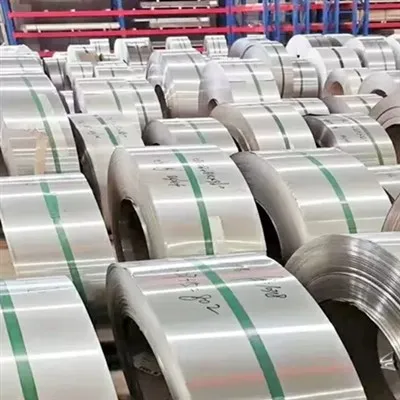
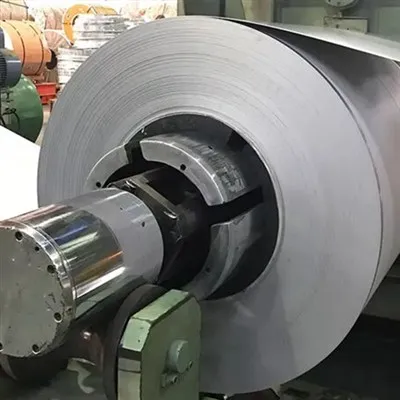
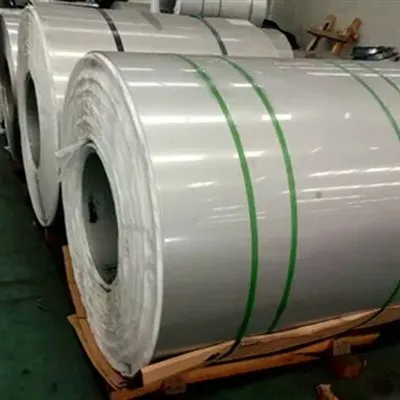
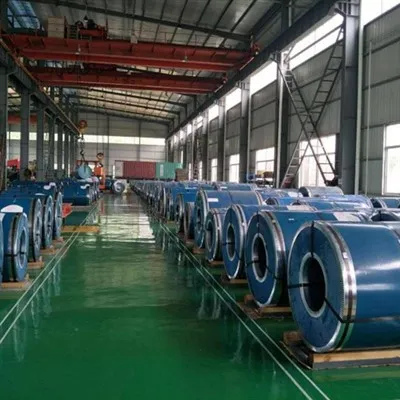
Stainless steel is initially produced in slabs, which are then put through a conversion process using a Z mill, which converts the slab into coil prior to further rolling. These wide coils are typically made at around 1250mm (sometimes a little wider) and are known as 'mill edge coils'.
These wide coils are further processed using a range of manufacturing techniques such as slitting, where the wide coil is slit into a multitude of strands, this is where much of the confusion around the terminology comes in. After slitting, the stainless steel forms a batch of coils taken from the mother coil and these are referred to by many different names, including strip coils, slit coils, banding or simply strips.
The way coils are wound can result in different names being applied to them. The most common type is known as a 'pancake coil', named after the way the coil looks when laid flat; 'ribbon wound' is another name for this method of coiling. Another type of winding is 'traverse' or 'Oscillated' , also known as 'bobbin wound' or 'spool' due to the fact that it looks like a bobbin of cotton sometimes these can be physically wound onto a plastic spool. Producing coil in this way allows much larger coils to be produced, resulting in improved stability and better production yields.
What Are the Different Grades of Stainless Steel Coils
Stainless steel is divided into several categories and each category is further divided into grades and series. The steel grade defines what type of steel and its composition and properties. While the grades reflect the specific alloy's durability, quality, and temperature resistance, the numbers listed after the grade refer to its chemical composition, especially the chromium and nickel percentages.
The most used grades of steel are the 200 series, 300 series, 400 series and duplex series. Moreover, 304, 304L, 316 and 316L stainless steel coils are the most popular and economical grades of stainless steels.
The Grade 304 stainless steel coil is the most standard used chromium alloy of this which is also known as an "18/8" stainless as the make-up of the steel is 18% chromium and 8% nickel. The chromium component adds resistance to the effects of corrosion and oxidation. This steel is used throughout industry, specifically in heat exchangers, chemical containers, pipelines and throughout the brewing industry.

Machinability is one of its various advantages, when making coils, SS grades 304 and 316 are most frequently employed. It doesn't lose any strength during the welding process, but annealing ensures the highest level of corrosion resistance. These items regain their previous physical properties and machining capabilities after welding. Weldability is an added bonus.
Stainless steel coil welding is a straightforward technique, although filler materials must be employed at all times. Stainless steel 304 coils are vulnerable to carbide precipitates developing after welding. After welding, annealing is a crucial phase that guarantees malleability, ductility, resistance to corrosion, and strength retention. It has high corrosion resistance against the majority of forms because to the stainless steel alloy in the coil.
SS coils that have been hot-worked or cold-wrought are equally durable and robust. With the exception of minor visual variations, the two are identical.
What Is the Difference Between Stainless Steel Sheet and Coil
Stainless steel sheets and stainless steel coils are distinct forms of stainless steel products, each tailored to meet specific manufacturing and application needs.
Stainless steel sheet: Stainless steel sheets resemble flattened rectangles, available in diverse sizes and thicknesses. These sheets are crafted through cold rolling or hot rolling processes, with cold-rolled sheets exhibiting a smoother surface and tighter tolerances. Widely used across various industries, stainless steel sheets are adaptable and can be cut or shaped to suit specific project requirements. Their versatility makes them an ideal choice for applications ranging from construction and automotive to kitchen appliances.
Stainless steel coil: Contrasting with sheets, stainless steel coils manifest as lengthy, continuous rolls. Produced predominantly through the hot rolling method, coils are wound into a cylindrical form, presenting a practical solution for industries requiring a continuous and efficient supply of material. Stainless steel coils serve as the foundation for further processing, allowing manufacturers to cut or shape the material based on the unique specifications of their end products. This continuous format is particularly advantageous for high-volume manufacturing processes.
● Key differences
1. Form and size: Sheets are flat and come in designated lengths and widths, while coils are continuous rolls, offering a convenient solution for consistent material supply in manufacturing processes.
2. Manufacturing process: Sheets can be produced through cold or hot rolling, providing flexibility in surface finish, whereas coils are primarily the result of hot rolling, ensuring a continuous and efficient production method.
3. Applications: Sheets are well-suited for projects requiring specific sizes or smaller-scale applications, while coils are instrumental in industries demanding a constant and uninterrupted supply of stainless steel for ongoing manufacturing processes.
Stainless Steel Coil Products
The most common types of stainless steel coils on the market today: stainless steel coil 304, stainless steel coil 316, stainless steel coil 201, stainless steel coil 430. Each type of stainless steel coil has its own characteristics and uses for different purposes:
304 stainless steel is standard stainless steel (Minimum 18% Crome and 8% Nickel). It has the most flexibility and the most widely used, accounting for a larger proportion than other stainless steel grades. The product is appreciated for its excellent weldability, its ability to allow deep stamping without intermediate annealing. This is why it dominates the production of stainless deep stamping sets such as sinks, pots and pans.
Applications: Products are also used in architecture, food and beverage processing, equipment and utensils, construction of domestic and foreign commercial kitchens, sinks, and plants for chemicals, chemicals oil, mineral processing and other industries ...
This type of stainless steel has outstanding durability and resistance to erosion, especially in harsh environments. For 316L stainless steel, due to the carbon content at an extremely low level, carbon deposits are minimized during the heat welding process, ensuring maximum corrosion resistance. This is a high-grade stainless steel, providing the highest efficiency, quality and aesthetics.
Application: This product is used most strongly in industry, especially in oil and gas, shipbuilding.
Stainless steel coil 201 is a material with light properties, not rust, so it has high aesthetics, reducing the load on the sea, increasing the cohesion of the word on the sea. Whether undergoing all weather conditions or physical and mechanical impacts, the stainless steel in grade 201 still affirms its outstanding durability. Due to the influence of the element Manganese, the stainless steel coil 201 is stiffer, its ability to stretch is less than that of the stainless steel in grade 304.
Applications: Products are most commonly used in the production of household appliances such as kitchen utensils: pots, pans, sinks, water basins, spoons, spoons, or spoons, often used in advertising such as signs, footers, ...
This type of stainless steel coil has low carbon content, so its durability as well as resistance to corrosion are inferior to other types of stainless steel. Their prices are quite cheap.
Applications: This stainless steel coil is used to avoid erosion in critical welds.
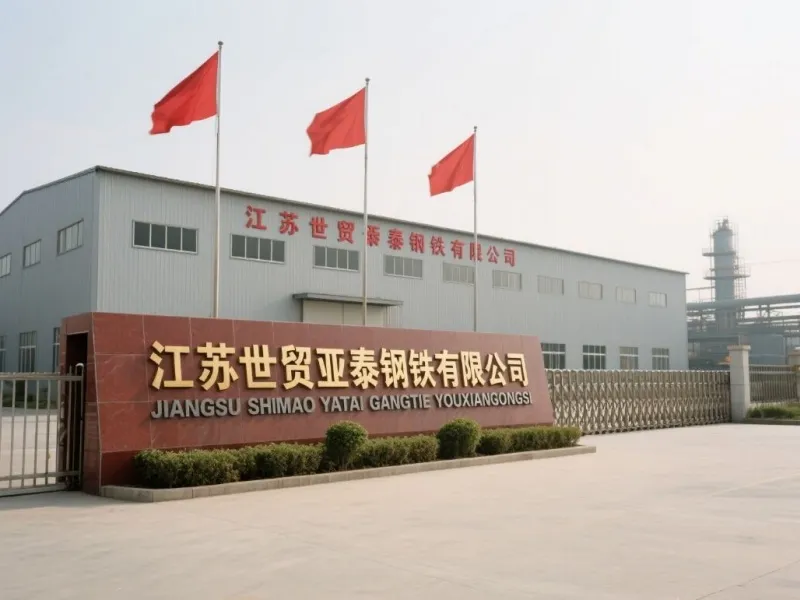
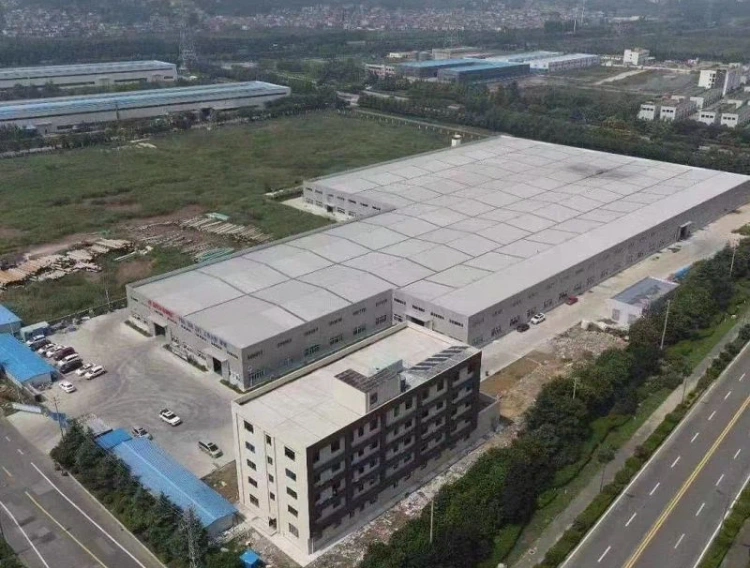
Wuxi Hongcheng Metal Products Steel Co.,ltd is a manufacturer and exporter dedicated to stainless steel industry for decades. With improving sales and service experience, we have now built strong business relationships with clients at home and abroad.
Hongcheng Metal Products is an enterprise incorporating raw material supply, storage, processing and delivery with the benefits of advanced industries and convenient transportation.
FAQ
As one of the most professional stainless steel coil manufacturers and suppliers in China, we're featured by quality products and good price. Please rest assured to buy stainless steel coil made in China here from our factory.
stainless steel 430 coils,